I have shot for companies where the prospect saw our work before they ever talked to a salesperson. A managing partner at a law firm told me he chose our firm over two competitors because "your people looked real." He was on the firm's website, saw the team page, and the headshots looked like actual attorneys, not catalog models. That's the know-like-trust cycle in action, except nobody at the firm planned it that way. The headshots just did their job.
How Prospects Actually Evaluate You Online
Here is what happens in practice, setting the theoretical buying process aside.
Someone hears your company name. Maybe a referral, maybe a Google search, maybe they saw a LinkedIn post. They type your name into a browser. They land on your website. Within five seconds they've clicked the About page or the Team page.
They scan the headshots without analyzing composition or lighting, and they ask one question: do these people look like someone I'd want to work with?
Then they check LinkedIn. They search for the person they'd be working with. If the LinkedIn headshot doesn't match the website, they notice. They may not notice consciously, but it registers and something feels off. If half the team has no headshot at all, just the default gray silhouette, they notice that too.
This entire evaluation takes 30 seconds. Most companies never realize they lost a deal at this stage. The prospect just moved on to the next option without sending an email or making a call.
Everyone Who Vets You Visits the Team Page
Prospects, recruits and potential partners all look at your team page, and it either builds confidence or raises doubt.
Firms that replace dated headshots without touching anything else on the site often tell us the phone starts ringing differently. The copy, the layout, and the services page stay the same, and only the photographs of the people behind them change.
An accounting firm's recruiting team reported that candidates mentioned the "professional team page" in interviews, unprompted, and candidates were choosing to interview there partly because the firm looked like it had its act together online.
A construction company told us their project managers started winning more bids after we updated their proposal headshots. The operations VP said clients commented that "your team looks sharp." These are not hypothetical examples. They are patterns we see across industries, and the team page does more selling than most companies realize.
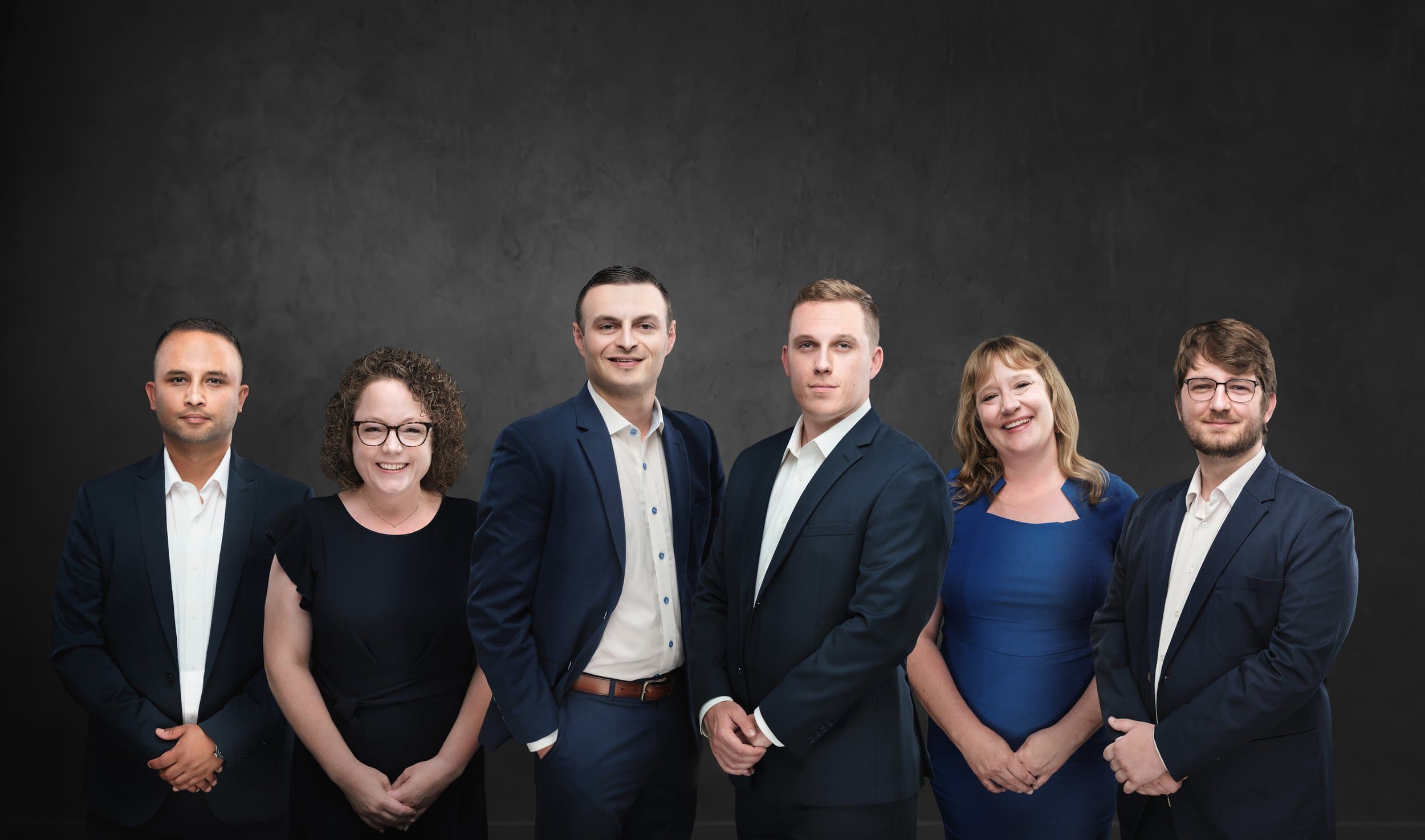
Your team page is working right now
Is it building trust or raising questions? Check whether it is doing the right job.
Get a QuoteConsistency Is the Trust Signal
Trust comes from repetition rather than from any single image. When every touchpoint matches, website headshots, LinkedIn profiles, email signatures, conference badges, pitch deck bios, it signals an organization that pays attention, follows through, and can be trusted with your business.
When they don't match, it signals the opposite. If the website shows a headshot from 2019 and the LinkedIn shows one from last month, the prospect wonders what else is outdated. If the pitch deck uses stock photos for "the team" and then real people show up to the meeting, there's a disconnect.
Most companies don't think about this. They update photos randomly. One person gets a new headshot when they feel like it. Another uses their wedding photo cropped to shoulders. The intern took a few shots on an iPhone last year. The result is a team page that looks like it was assembled by accident, because nobody planned it.
Their competitors' marketing directors do think about this, and those competitors look more put together before anyone picks up a phone.
What to Photograph at Each Stage
This is a practical breakdown of what visual content does the most work at each point in the relationship.
Discovery stage: This is where 80% of first impressions happen. Team headshots on your website and LinkedIn. That is the minimum, and if you do nothing else, do this. Every person on your team who interacts with clients, recruits, or partners needs a current, professional headshot that matches across platforms.
Consideration stage: The prospect is comparing you to alternatives. Case study photography showing real work for real clients gives you an edge. Use actual images from actual projects rather than stock photos illustrating a case study. A photo of your team on-site at a client facility says more than three paragraphs of copy.
Decision stage: The prospect is about to meet your team. The pitch deck needs real team photos, not stock. When the prospect walks into the meeting, they should recognize the people from the deck. That familiarity creates comfort before anyone says a word. I've had clients tell me that prospects commented on this specifically: "I feel like I already know your team."
Retention stage: The relationship doesn't end at the signed contract. Event photography, project documentation, and client appreciation content keep the relationship visible and valued. When you photograph a client event and share those images, you're reinforcing the relationship in a way that a thank-you email can't match.
Start With the Team Page
You don't need all of this at once, so start with the team page. That one investment touches every prospect, every recruit, and every client who checks your website. It works around the clock and pays for itself faster than almost any other marketing spend.
Once the team page is solid, move to your LinkedIn profiles. Make sure every team member's LinkedIn headshot matches the website. That consistency alone puts you ahead of 90% of your competitors.
Everything else builds from there. Case study photography when you have a great project to document. Event photography when you host something worth capturing. Pitch deck updates when you're chasing a specific opportunity.
The team page is the foundation, so get that right first. A corporate headshot program built around consistency is the fastest way to fix it.
What would you change about how your company looks online?
Get a free estimate for professional photography that moves prospects through the buying process.
Get a Quote