Wardrobe Guide
What to Wear for Professional Headshots
Your outfit is the second most important element in your headshot, right after your expression. This guide covers exactly what to wear, what to avoid, and how to dress for your specific industry. It is based on thousands of sessions across every professional field.
Why Your Outfit Matters More Than You Think
In the first 100 milliseconds of seeing your headshot, people form a judgment about your competence, trustworthiness, and likability. Your expression drives most of that perception, but your clothing is a close second. The wrong outfit creates cognitive dissonance: your face says "confident professional," but your wrinkled shirt says "did not prepare."
After photographing over 5,000 professionals across corporate, legal, healthcare, tech, and creative industries, we have seen every wardrobe success and failure. The patterns are clear. The professionals who look the best on camera are not the ones wearing the most expensive clothing. They are the ones who chose solid colors, made sure everything fit properly, and ironed their outfit the night before.
This guide gives you specific, actionable wardrobe direction so you walk into your session with zero guesswork. Read the general rules first, then skip to your industry section for advice specific to your field.
General Rules That Work for Everyone
These 8 principles apply regardless of your industry, role, or personal style. Follow them and you are 90% of the way there.
Stick to Solid Colors
Solid colors keep the focus on your face. They photograph cleanly on every background and never distract. This single rule eliminates 80% of wardrobe mistakes. Solids also give your photographer maximum flexibility with backdrops, because there is no pattern to clash with the background color or texture.
Choose Structured Pieces
Blazers, structured jackets, and crisp collars photograph with authority. Soft, flowy fabrics can look shapeless under studio lighting. Structured clothing creates clean lines around your shoulders and neck, which frames your face. This does not mean stiff or uncomfortable. A well-tailored blazer in a soft fabric gives you structure without rigidity.
Fit Over Fashion
A well-fitting $50 shirt beats an ill-fitting $500 blazer every time. Nothing should pull, bunch, or gap. Shoulders should sit at the edge of your natural shoulder line, collars should lay flat, and sleeves should show a quarter inch of cuff if wearing a jacket. If something does not fit perfectly, bring your next best option.
Wear What Feels Like You
Your headshot should look like the best version of you at work. If you never wear suits, a suit will look forced. If you always wear a blazer, go with that. The people who see your headshot already know you, or will meet you soon. There should be no disconnect between the photo and the person who shows up.
Layer for Options
Start with more and remove layers to create different looks. A blazer over a button-up with no tie gives you three distinct options in under a minute: full suit, blazer with open collar, and button-up alone. Layering also lets your photographer recommend the strongest combination after seeing how everything looks on camera.
Iron Everything
Wrinkles are the number one wardrobe problem in headshot sessions. Studio lighting amplifies every crease. Iron or steam your outfit the night before and hang it. Do not fold it into a bag. If you are traveling to the shoot, bring a portable steamer or ask if the studio has one available. Even brand-new shirts straight from the package have fold creases that show on camera.
Check the Neckline
Headshots crop tight, so your neckline is one of the most visible elements. V-necks elongate your neck and face. Crew necks can make you look broader. High collars and turtlenecks photograph well in cooler months. Avoid anything that sits oddly or gapes open. The neckline is the frame for your face, and a clean frame makes the whole image work.
Prepare the Night Before
Do not leave outfit decisions for the morning of your session. Lay out your complete outfit, including accessories, belt, and shoes if applicable. Check for lint, stains, loose threads, and missing buttons. Try on the full outfit and sit in it to make sure it does not ride up or bunch when you are seated. A 10-minute check the night before prevents a 30-minute crisis the morning of.
What to Wear by Industry
Every industry has its own visual language. Your headshot needs to speak it fluently.
Corporate & Finance
Corporate and finance professionals are expected to look polished and authoritative. Your headshot will appear on investor materials, regulatory filings, and client-facing documents. Navy and charcoal communicate competence and trustworthiness. These are not fashion choices. They are strategic. A white or light blue shirt under a dark jacket creates the contrast that makes your face stand out. Avoid black suits if you work in private banking or wealth management, as they can read as too severe. For women, a structured blazer over a simple top achieves the same effect without requiring a full suit. On ties: they are genuinely optional now. We photograph a lot of financial advisors in Clayton and Chesterfield, and roughly one in five still wears one.
Recommended
- Navy or charcoal suit jacket
- White or light blue dress shirt
- Conservative tie (optional, solid or subtle pattern)
- Minimal, classic jewelry (watch, small earrings)
Legal
Law firm headshots appear on the firm website, court filings, legal directories, and conference materials. Clients are trusting you with high-stakes decisions, and your headshot should communicate gravitas. Dark suits are the standard across practice areas. A lighter shirt provides necessary contrast against the dark jacket and dark background most firms use. Avoid bright colors, trendy cuts, or casual attire even if your firm has a relaxed dress code. Your headshot represents you in contexts far more formal than your day-to-day office. Partners and associates should photograph in the same general style for website consistency.
Recommended
- Dark suit (navy, charcoal, or black)
- White or French blue dress shirt
- Conservative tie with subtle pattern or solid color
- Simple, understated accessories
Healthcare
Healthcare headshots serve dual purposes: they appear on hospital directories and patient portals where approachability matters, and on insurance panels and referral networks where authority matters. Physicians have the option of a white coat over a collared shirt and tie, which immediately communicates their role. The white coat should be spotless, pressed, and properly sized. Some physicians prefer business attire without the coat for a more approachable look. Administrators and non-clinical staff should wear standard business professional. For clinical staff who prefer scrubs, choose clean, pressed scrubs in your facility's color and pair them with a welcoming expression. Coat or no coat is the single most common question we get from healthcare clients, and we photograph physicians at WashU Medicine and BJC regularly. The honest answer is to bring both and decide on the day.
Recommended
- White coat over business attire (for physicians)
- Business professional for administrators
- Clean, pressed scrubs for clinical staff (if preferred)
- Minimal jewelry, clean nails
Technology & Startups
Tech headshots need to look professional without looking corporate. The industry values authenticity and competence over formality. A clean button-up with the top button open, or a quality crew neck, photographs perfectly for company websites, GitHub profiles, and conference speaker pages. The key is intentionality. A ratty old t-shirt reads as careless. A well-chosen solid-color tee with a blazer reads as confident. Startup founders and CTOs can push toward the casual end. Product managers and those in client-facing roles should err slightly more professional. Avoid hoodies, graphic tees, and anything that looks like you rolled out of bed.
Recommended
- Smart casual: button-up shirt without a tie
- Clean, well-fitting crew neck or henley
- Optional blazer for a polished edge
- Dark jeans or chinos (if visible in the crop)
Real Estate
Real estate headshots live everywhere: yard signs, business cards, Zillow profiles, broker websites, and print ads. They need to work at small sizes and from a distance. This means high contrast between your clothing and the background is critical. A dark blazer on a light background, or vice versa, ensures you are recognizable on a 4x6 inch sign viewed from a moving car. Your outfit should say approachable and successful without being intimidating. A blazer with an open-collar shirt is the industry sweet spot. Avoid overly casual or overly formal extremes. Your headshot will be in use for years, so choose classic styles over trendy ones.
Recommended
- Polished but approachable: blazer with open collar
- Solid colors that pop on yard signs and business cards
- Well-fitting, modern cuts
- Accessories that add personality (statement watch, tasteful necklace)
Creative & Marketing
Creative professionals have the most freedom but also the most room for error. Your headshot is a portfolio piece. It should communicate your aesthetic and taste. If you are a brand designer, your outfit should feel intentional and well-considered. If you are a copywriter, a clean, smart-casual look works. The trap is overthinking it and wearing something costume-like that distracts from your face. Bold colors and interesting textures work well. Black is a classic foundation in creative industries. The best approach is to dress as you would for a meeting with your ideal client. That person is who your headshot needs to speak to.
Recommended
- Personality-forward pieces that reflect your brand
- Bold colors, interesting textures
- Creative accessories (statement glasses, unique jewelry)
- Black remains a safe, stylish foundation
Colors That Photograph Best
These six colors deliver consistently strong results across all skin tones and backgrounds.
Navy
Universally flattering across all skin tones. Communicates trust, competence, and authority. The single safest choice for any professional headshot.
Charcoal
Modern alternative to black. Softer and more versatile. Works on both light and dark backgrounds without losing dimension.
Burgundy
Adds warmth and personality without being distracting. Photographs beautifully on all skin tones. Excellent for standing out on a page of navy headshots.
Forest Green
Distinctive and professional. Particularly flattering on warm skin tones. A confident choice that signals personality without going overboard.
White
Clean and fresh, especially as a shirt under a darker jacket. Avoid all-white outfits as they compete with studio lighting. Best used as an accent layer.
Cream
Softer than white and more forgiving on camera. Works well for environmental or lifestyle headshots. Pairs beautifully with navy and charcoal pieces.
Notice a pattern: these are all muted, rich tones. They provide enough color to be interesting without competing with your face. Avoid neon, pastel, or highly saturated versions of these colors. The muted, deeper version always photographs better.
Colors to be careful with
- Red. Can overpower the frame and throw a color cast onto skin.
- Bright yellow and orange. Reflect unflattering tones up onto the face.
- Neon anything. Distracting on camera, and it dates a headshot fast.
What This Looks Like on Real People
Nine frames from a single executive session. Same light, same location, same photographer. The only thing that changes is the clothing.
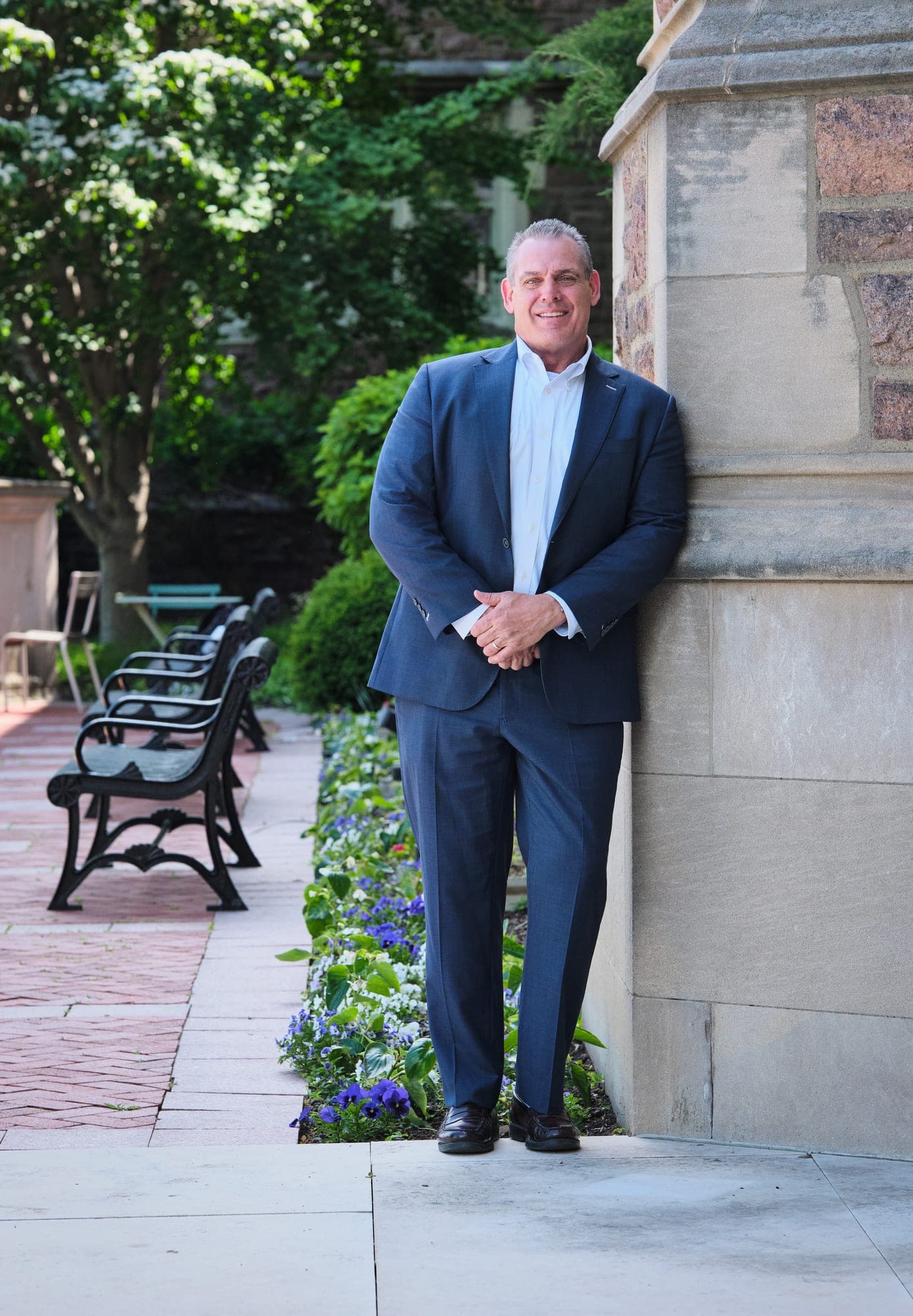
Navy, no tie
A navy suit over an open collar. Still reads as authority without the formality of a tie, which is where most corporate dress codes have landed.
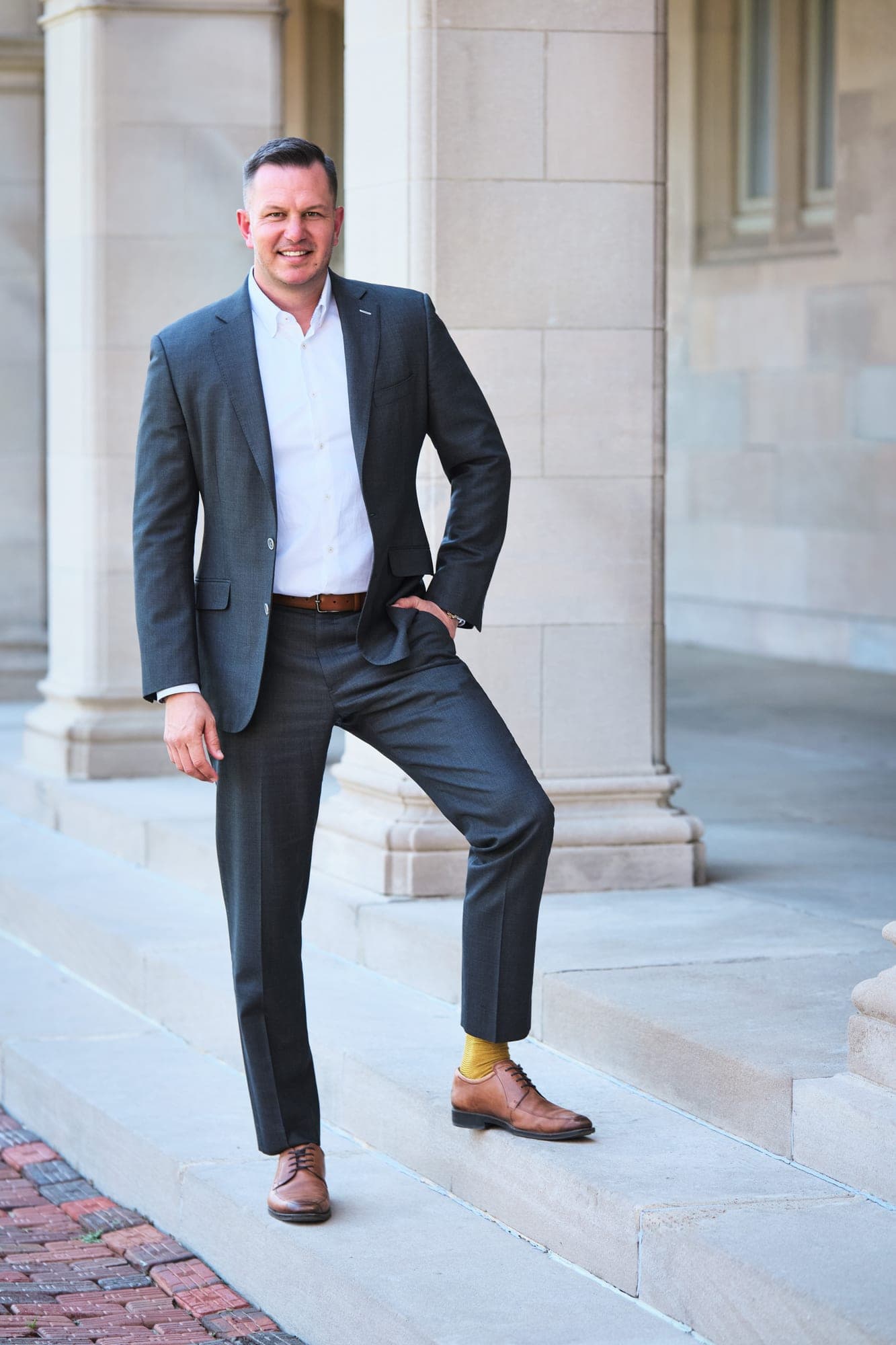
Charcoal with a white shirt
The most forgiving combination there is. Charcoal holds its shape on camera and the white shirt lifts light back into the face.
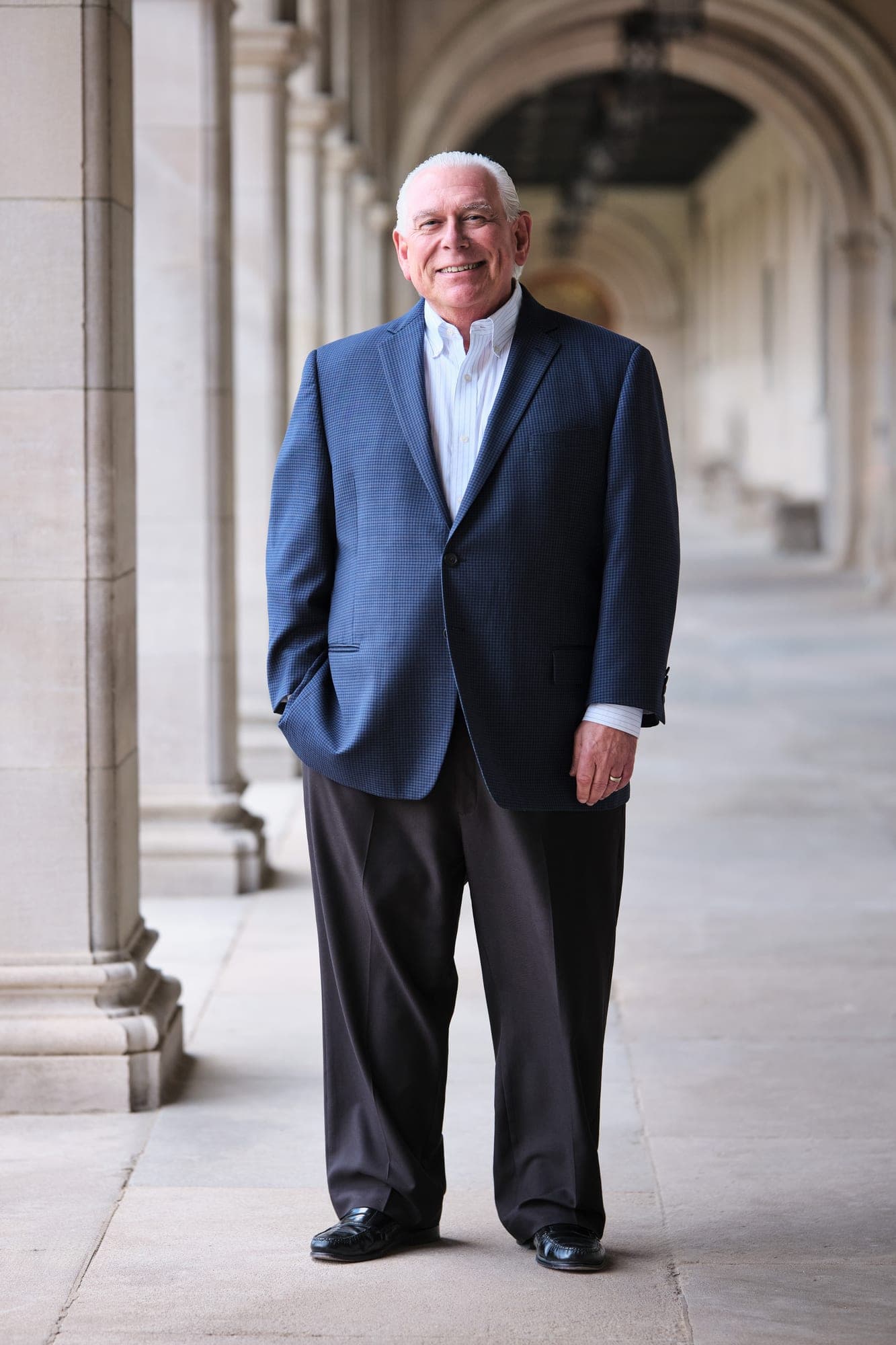
A blazer instead of a suit
Separates work as well as a matched suit. The blazer is doing the structural job; it does not need to match the trousers.
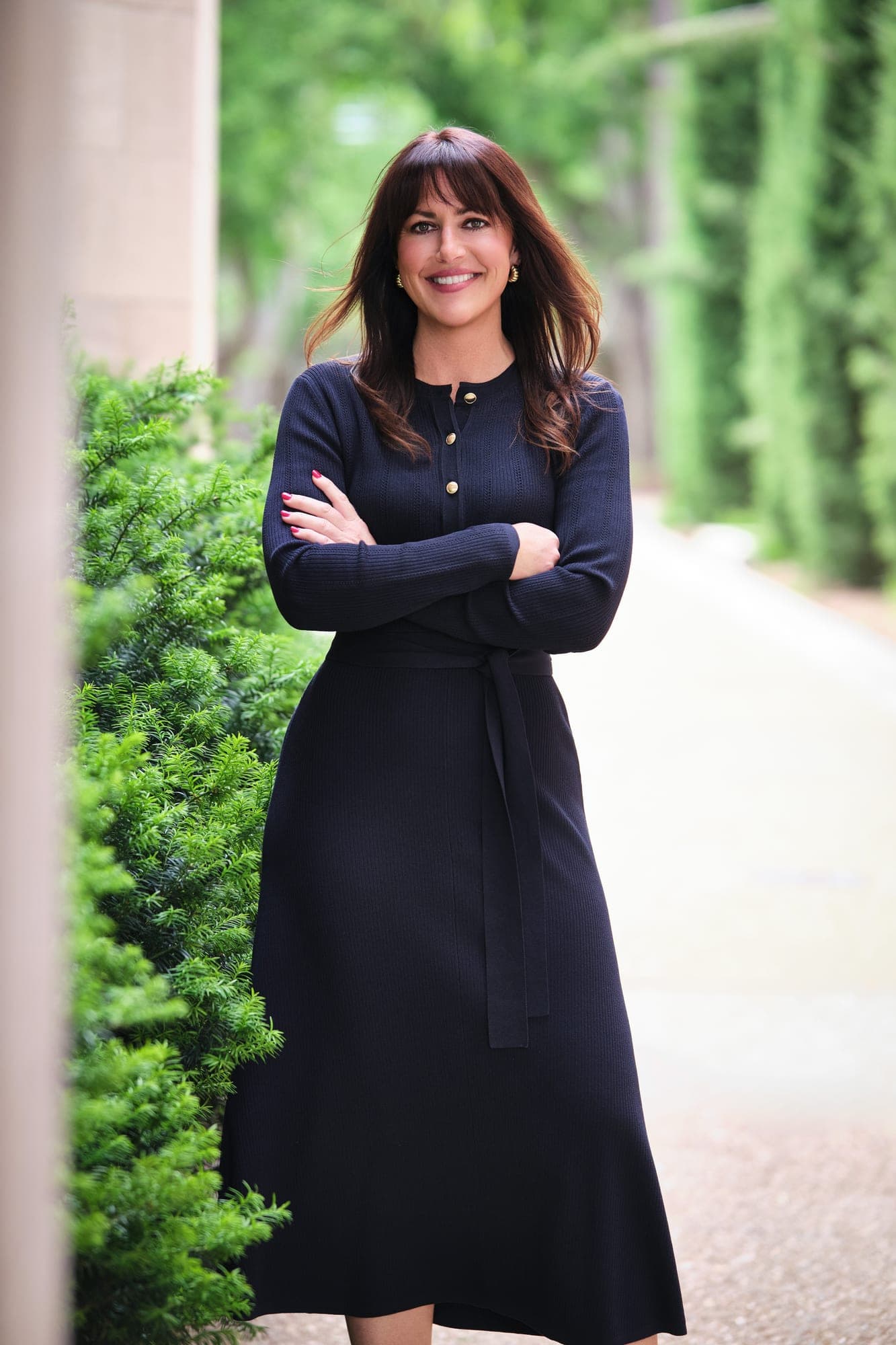
One colour, head to toe
A single dark tone from shoulder to hem gives a long, uninterrupted line and puts every bit of contrast in the frame on the face.
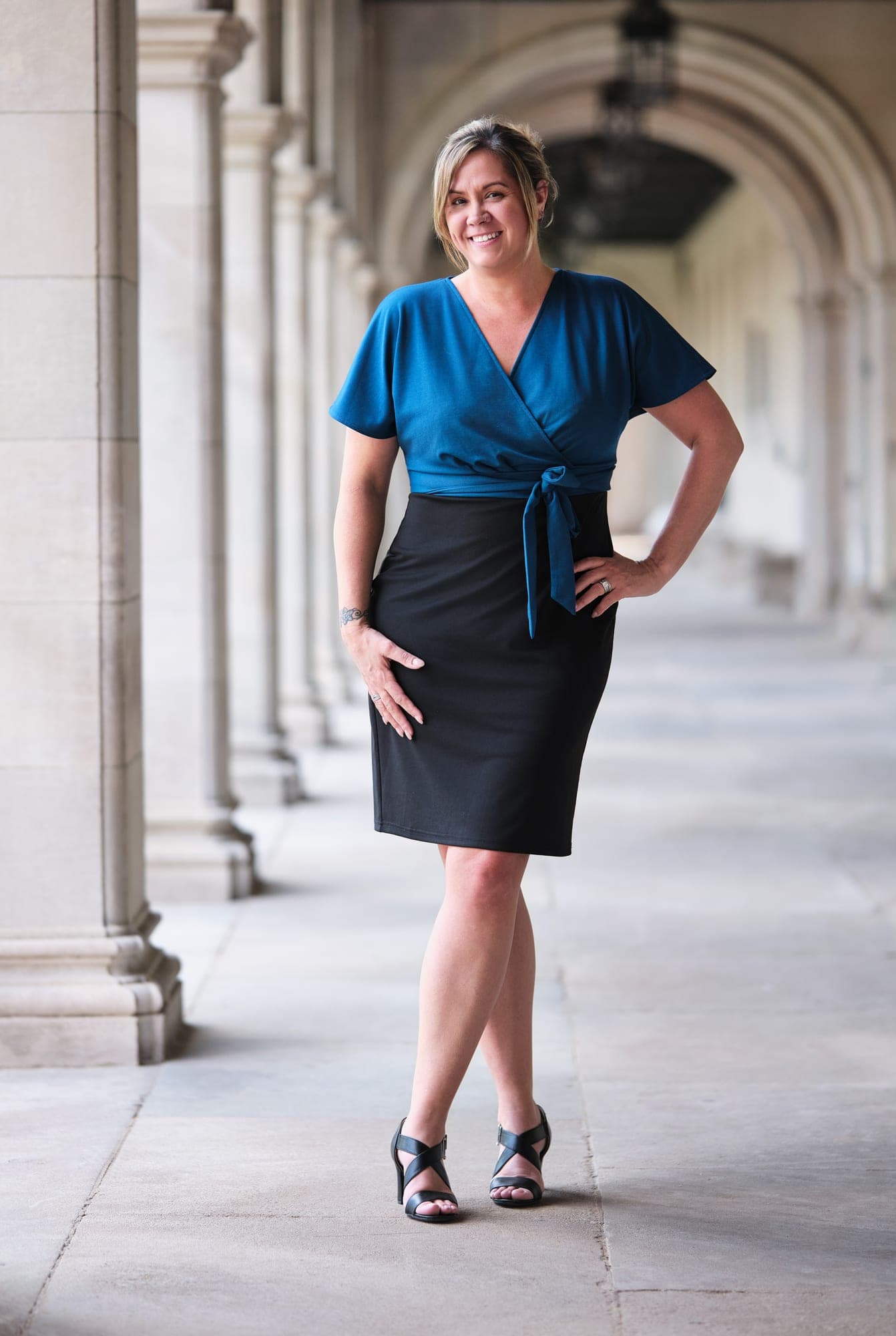
A jewel tone
Teal is the example most people need. Rich enough to be a real colour choice, muted enough that it never competes with skin.
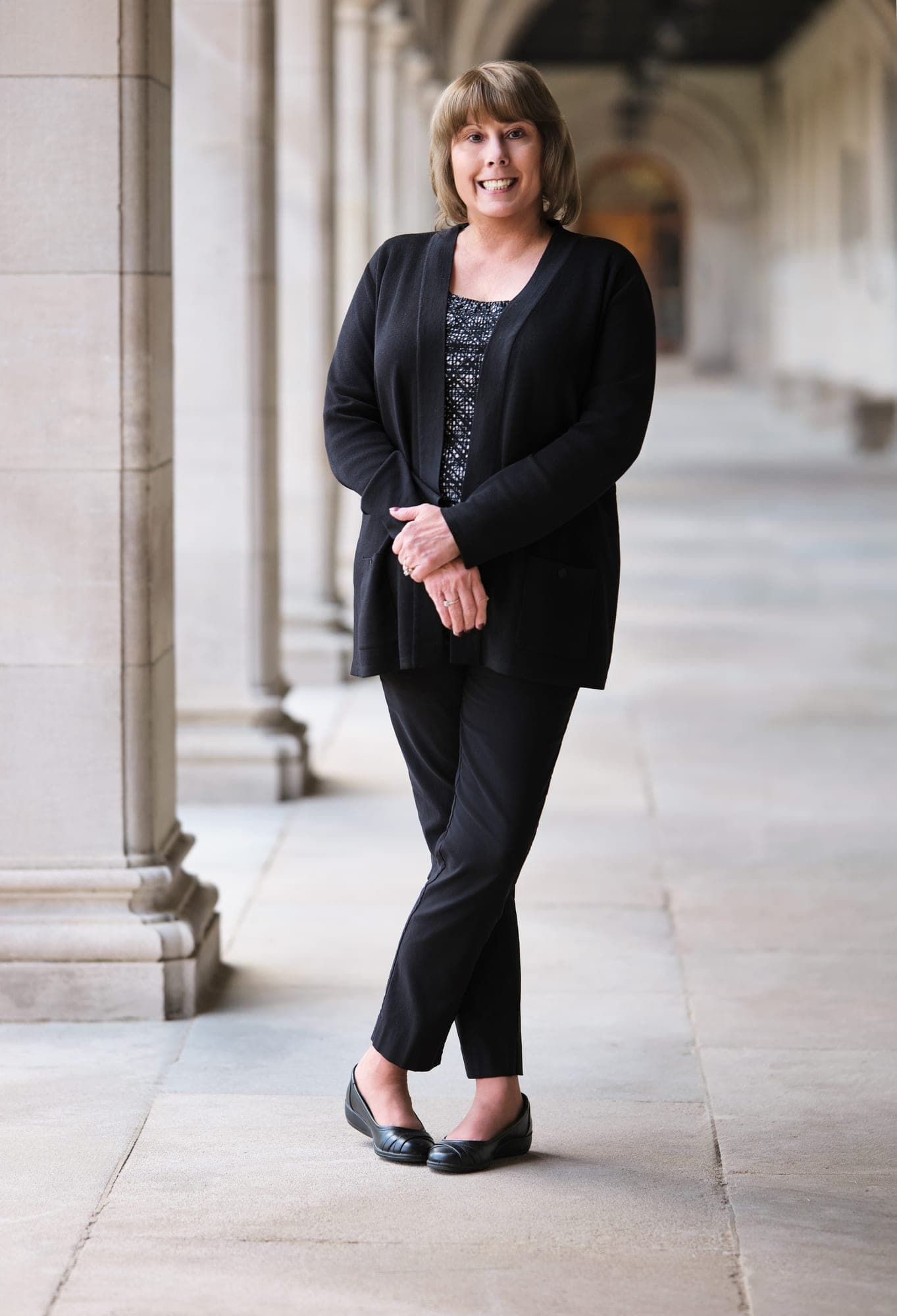
Layering in one dark tone
An open cardigan over a darker top. Layers give the photographer two looks in one session: on and off.

A pattern, framed by a solid
The cardigan does the work here. It brackets the print so only a narrow strip of it reaches the camera, near the face but not around it.
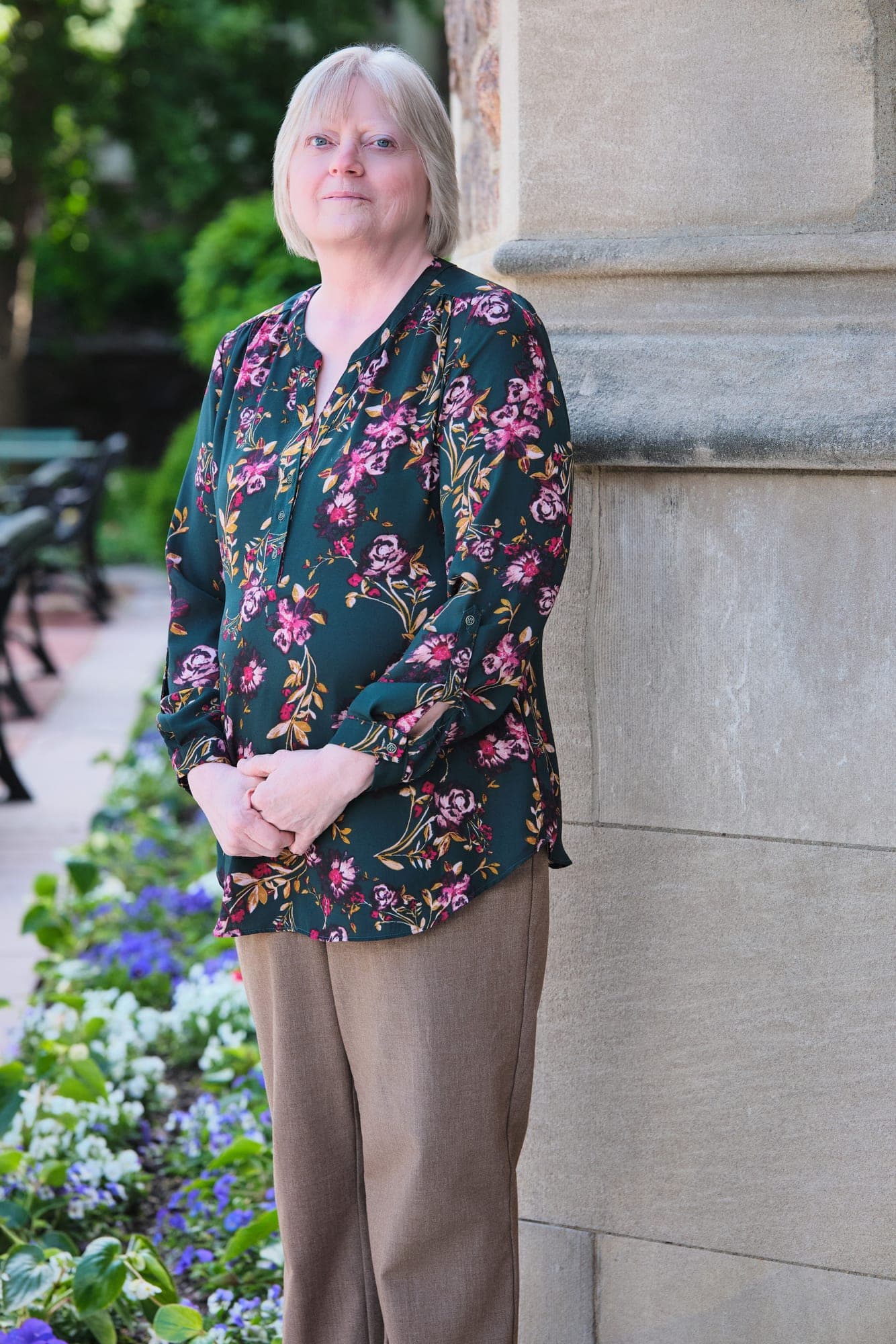
A print as the whole outfit
A large-scale print carries real personality. It also becomes the loudest thing in the frame, which suits a personal brand better than a directory grid.
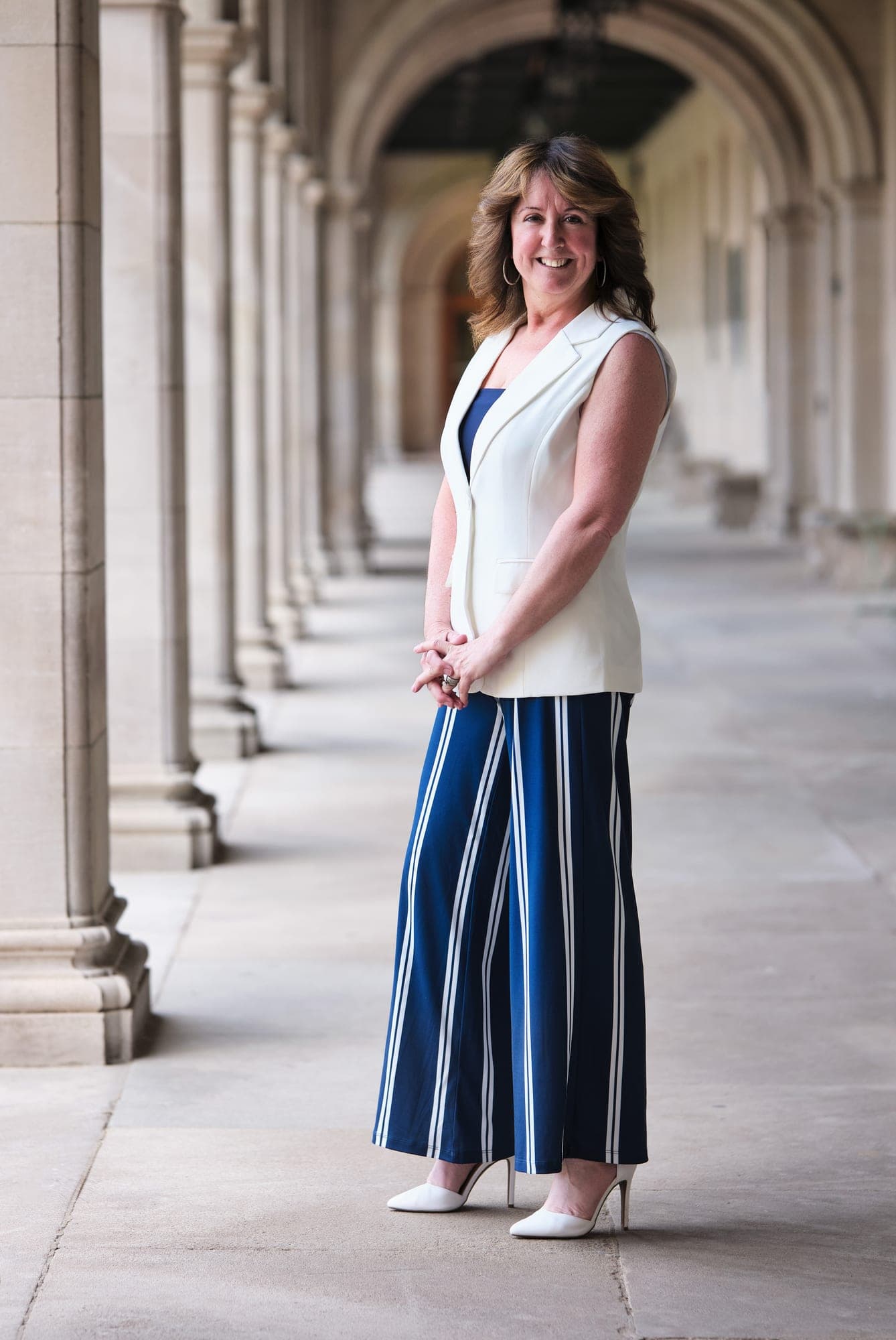
Pattern below the crop
Striped wide-leg trousers under a plain top. In a full-length frame the stripe is the styling; crop to the shoulders and it disappears entirely.
Every one of these works. There is no single correct outfit, only choices that let your face stay the loudest thing in the frame.
What to Avoid
These are the most common wardrobe mistakes we see. Every one of them is preventable.
Busy Patterns and Prints
Stripes, plaids, florals, and geometric prints compete with your face for attention. Fine stripes create a moire effect, a wavy visual distortion that is impossible to fix in post-production. Even subtle patterns can be distracting at headshot distance. Save the statement prints for the office and bring solids for your session.
Visible Logos and Branding
Company logos, brand names, and designer insignia turn your headshot into an advertisement. They date the image and distract from your face. Even small polo logos are noticeable in a close crop. If your company requires branded attire in headshots, make sure the logo is small, tasteful, and positioned on the chest where it will not dominate the composition.
All-White Outfits
White competes with studio lighting and can blow out (lose detail) in highlights. An all-white outfit against a light background makes you look washed out. White works perfectly as a shirt under a darker jacket, but as the dominant color in your outfit, it creates exposure challenges that affect your skin tones and overall image quality.
Trendy or Seasonal Pieces
Your headshot should last 2-3 years. That off-shoulder top, oversized blazer, or neon accessory that is trending this season will date your image within months. Choose timeless pieces: classic blazers, simple necklines, traditional collar styles. Your headshot should look current in 2026 and still look current in 2028.
Distracting Jewelry and Accessories
Large dangling earrings catch light and create bright spots in the image. Chunky necklaces compete with your neckline. Stacked bracelets add visual noise. Keep accessories minimal and refined. A watch, small studs, or a thin necklace are appropriate. Anything that draws your eye away from the face in a test selfie will be even more distracting under professional lighting.
Wrinkled or Ill-Fitting Clothing
Wrinkles look worse on camera than in person. Studio lighting creates shadows in every crease. Ill-fitting clothing bunches, gaps, and sags in ways that make you look disheveled regardless of the garment's quality. Press everything. Try everything on the night before. If the fit is not right, bring your next best option. No one will know you are wearing your backup outfit.
Brand-New Clothes You Have Not Worn
Stiff fabric shows. A jacket that has never been worn sits differently across the shoulders, and a collar straight out of the packet holds its fold. If you buy something for the session, wear it for an afternoon first so it relaxes into your shape.
Sleeveless Tops, If the Crop Is Tight
A headshot cropped to the shoulders can make a sleeveless top read as no top at all. It is not a problem in a three-quarter or full-length frame, so if you want to wear one, bring a jacket or cardigan as well and we will shoot both.
More Layers Than You Can Sit Under
Studio lights get warm, and so does anyone standing under them. If you run hot, keep the layers to something you can comfortably wear for twenty minutes. Being uncomfortable shows up in the expression long before it shows up on your forehead.
Grooming Tips
Your outfit is only half the equation. These grooming details round out a polished, professional look.
Schedule Your Haircut 1-2 Weeks Out
A fresh haircut needs time to settle and look natural. A same-day or day-before cut often looks too sharp and reveals the hairline in an unflattering way. Two weeks gives your hair time to fall into its normal pattern while still looking freshly groomed. If you color your hair, touch up roots at least a week before the session to avoid a visible line of demarcation.
Makeup: Natural and Matte
The goal is to look like your best self, not like you are going to a gala. Matte or semi-matte foundation prevents shine under studio lighting. Dewy finishes create hot spots that are difficult to retouch naturally. Define your eyes with soft liner and neutral shadow. Use a natural lip color close to your actual shade. If you normally wear bold lipstick as part of your professional identity, go for it. The key is to look like you, polished.
Skincare: Stick to Your Routine
The week before your session is not the time to try a new product, chemical peel, or facial treatment. Reactions, breakouts, and redness happen at the worst times. Stick to your tried-and-true skincare routine. Moisturize well the night before and morning of. If you have a persistent blemish, do not stress. Professional retouching handles temporary skin issues without making you look artificial.
Facial Hair: Groom the Morning Of
If you have a beard, trim and shape it the morning of your session. Clean up the neckline and cheek line. If you are clean-shaven, shave that morning. Five o'clock shadow is visible under studio lighting, even if you cannot see it in your bathroom mirror. For those with a stubble aesthetic, make sure it is intentional and even, not patchy or overgrown on one side.
Teeth, Nails, and Small Details
Brush and floss before your session. Avoid coffee and red wine the morning of, as they stain teeth in ways that are difficult to retouch naturally. Trim and clean your nails, as hands sometimes appear in certain poses. Check your ears and nose for anything you would not want visible in a high-resolution close-up. These small details are the difference between a good headshot and a great one.
Hydrate and Rest
Drink plenty of water the day before and the morning of your session. Dehydration shows on camera as dull skin, chapped lips, and tired eyes. Get 7-8 hours of sleep the night before. Dark circles and puffiness are the number one thing that undermines an otherwise well-prepared headshot. Skip excessive alcohol and salty food the night before, both cause facial puffiness.
Night-Before Checklist
Run through this list the evening before your session. It takes 10 minutes and prevents every common wardrobe problem.
Frequently Asked Questions
Quick answers about headshot wardrobe and preparation.
How many outfits should I bring to a headshot session?
Bring 2-3 outfit options. This gives you flexibility if something does not photograph as expected and allows your photographer to help you choose the strongest option on the spot. Even if you only need one final image, having backup options eliminates the risk of committing to a single outfit that might not work under studio lighting.
Can I wear black for my headshot?
Yes, black works well on most backgrounds and skin tones. It is slimming, classic, and professional. The key is pairing it with the right background. On a dark background, an all-black outfit can cause your face to appear to float. On a light or medium background, black creates a strong, authoritative look. A black blazer over a lighter top is a safe, versatile combination.
Should I wear my glasses in my headshot?
If you wear glasses daily, wear them in your headshot. People should recognize you. Clean them thoroughly before the session and remove any smudges. Your photographer will angle the frames and position the lights to minimize reflections and glare. Anti-reflective coatings help significantly. If you have a second pair without lenses, bring those as a backup option.
What if I am not sure what looks good on camera?
Bring your top 2-3 options and ask your photographer for input before the session starts. Professional headshot photographers see thousands of outfits on camera and can immediately tell you which combination will look strongest. You can also send photos of your outfit options ahead of time for feedback. Most photographers are happy to weigh in because it makes the session go smoother.
Do patterns ever work in headshots?
Very subtle patterns can work, like a finely textured weave or a barely visible check. The pattern should not be identifiable from arm's length. Bold stripes, large plaids, and busy prints distract from your face and can create a moire effect (a wavy visual artifact) on camera. When in doubt, solid colors are always the safer choice.
What should financial advisors and corporate professionals wear for headshots in St. Louis?
A dark suit jacket in navy or charcoal over a solid shirt. A tie is genuinely optional now: we photograph a lot of financial advisors in Clayton and Chesterfield, and roughly one in five still wears one. The goal is polished authority, so classic beats fashion-forward. Legal remains the most conservative dress code in professional services, calling for a dark suit, a pressed shirt and minimal accessories matched to the firm's standard. Technology and startups sit at the other end, where a well-fitted button-up with no tie is the sweet spot and a blazer adds versatility. Across every industry, fit matters more than label, and it is worth checking the fit sitting down rather than only standing up.
How far in advance should I plan my headshot outfit?
Plan at least a week ahead. This gives you time to try on options, get things dry cleaned or pressed, and fill any gaps. The morning of your session is too late to discover that your favorite blazer has a stain or your go-to shirt no longer fits comfortably. Lay out your complete outfit the night before, including accessories, and check everything under good lighting.
Ready for Your Session?
Now you know exactly what to wear. The next step is booking your session. Whether it is a single executive headshot or a full team photo day, we handle the rest. You just show up looking sharp.