A healthcare company in St. Louis asked us to produce 'a few videos' for their website. When we sat down for the discovery call, 'a few videos' turned into 12 deliverables across four departments, three locations, and a six-month timeline. That kind of scope creep is common, and I'd call it the norm. Enterprise video projects grow because once leadership sees what professional video looks like, every department head suddenly has a list. This post covers how to build a strategy that scales without your budget exploding.
The Five Types of Enterprise Video That Actually Get Used
Not all video content delivers equal returns. After producing hundreds of videos for organizations ranging from 50-person firms to Fortune 500 companies, this is how I rank them by actual business impact, meaning measurable results rather than production value or how cool they look.
1. Recruiting videos. Highest ROI by a wide margin. A two-minute video showing your real workplace, your actual people, and your real culture reduces cost-per-hire because candidates self-select. The ones who apply after watching already know what they're walking into. HR teams tell me these videos cut their interview-to-offer ratio because fewer mismatched candidates make it to the final round. One manufacturing client in the Midwest calculated they saved $40,000 in recruiting costs the first year after we produced three recruiting videos.
2. Client testimonials. These close deals. A prospect who watches a 90-second video of someone in their industry describing a specific positive experience with your company is further along the buying process than someone who reads a paragraph of text on your website. The key word is specific. A testimonial that says 'they were great to work with' is worthless. A testimonial that says 'they reduced our onboarding time from six weeks to two weeks' moves the needle. We coach interview subjects to tell stories with numbers as well as feelings.
3. Executive thought leadership. These position your leaders as authorities in your space. A three-minute video of your CEO talking about an industry trend, filmed cleanly and edited tightly, gets shared on LinkedIn and compounds brand credibility over time. After six months of regular thought leadership videos, one client's CEO went from 2,000 LinkedIn followers to 15,000. That audience became a direct pipeline for business development conversations.
4. Training and onboarding. These save internal time at scale. Every hour of training video you produce replaces hundreds of hours of live instruction over its lifetime. A 10-minute onboarding video that every new hire watches means your HR team isn't repeating the same orientation presentation every Monday morning. The ROI is easy to calculate: hours saved times the hourly cost of the people who would otherwise be delivering that training live.
5. Brand anthem films. The emotional, cinematic pieces that tell your company's story. I'll be honest: these are the most fun to produce. They're also the most expensive and the hardest to measure. They work well for a website homepage, a trade show booth, or an all-hands meeting. But they don't directly generate leads or close deals. I put them last because organizations that start here often blow their entire video budget on one film and have nothing left for the content that drives daily results.
The Production Math (Where Most Organizations Waste Money)
This is the part that costs companies the most when they get it wrong.
A single shoot day with a two-person crew, a director/camera operator and an audio/lighting tech, can produce three to four finished videos if the day is planned correctly. Most companies don't know this. They think each video requires its own shoot day, its own setup, its own crew mobilization. That misunderstanding literally doubles or triples the cost.
The math works like this. Setup takes about an hour. If we're shooting interviews, each person sits for 15-20 minutes. In a full day, we can interview six to eight people. Those interviews get cut into three or four distinct videos, plus pull quotes for social media clips. If we're shooting b-roll of your facility and team in action, a full day yields enough footage to support five to six videos.
The savings come from consolidation: one day of crew travel, one day of equipment setup, and one day of disruption to your team produce multiple finished deliverables. When a client asks me to produce one video per shoot day, I tell them they're leaving money on the table. Batch your production days and your cost-per-video drops dramatically.
Which videos does your company need first?
One shoot day can produce 3-4 finished videos. Tell us which videos you need.
Get a QuoteRetainer vs. Project-Based: When Each Makes Sense
The retainer model works when you need content on a regular cadence and you're tired of the procurement cycle for every project. We agree on a monthly scope, say two finished videos per month, schedule a recurring shoot day, and deliver on a predictable timeline. You get priority scheduling, consistent pricing, and no SOW negotiation every time you need something. I have retainer clients who text me Tuesday morning and have a crew on site Thursday. That responsiveness is built into the relationship. Retainers work best for organizations producing ongoing social content, regular thought leadership pieces, or monthly training materials.
Project-based works when you have a specific campaign, event, or initiative with a defined start and end date. You know exactly what you need and you don't anticipate needing video again for several months. Project pricing is typically higher per-video than retainer pricing because every project carries its own discovery, planning, and mobilization costs. But if you only need video twice a year, a retainer doesn't make financial sense.
The breakpoint I give clients: roughly one video per month. More frequent than that, a retainer saves money. Less frequent, project-based is more efficient.
Combining Photo and Video in One Visit (Our Best Value Play)
This is where I save clients the most time and money, and it's something most video companies don't offer because they don't shoot stills.
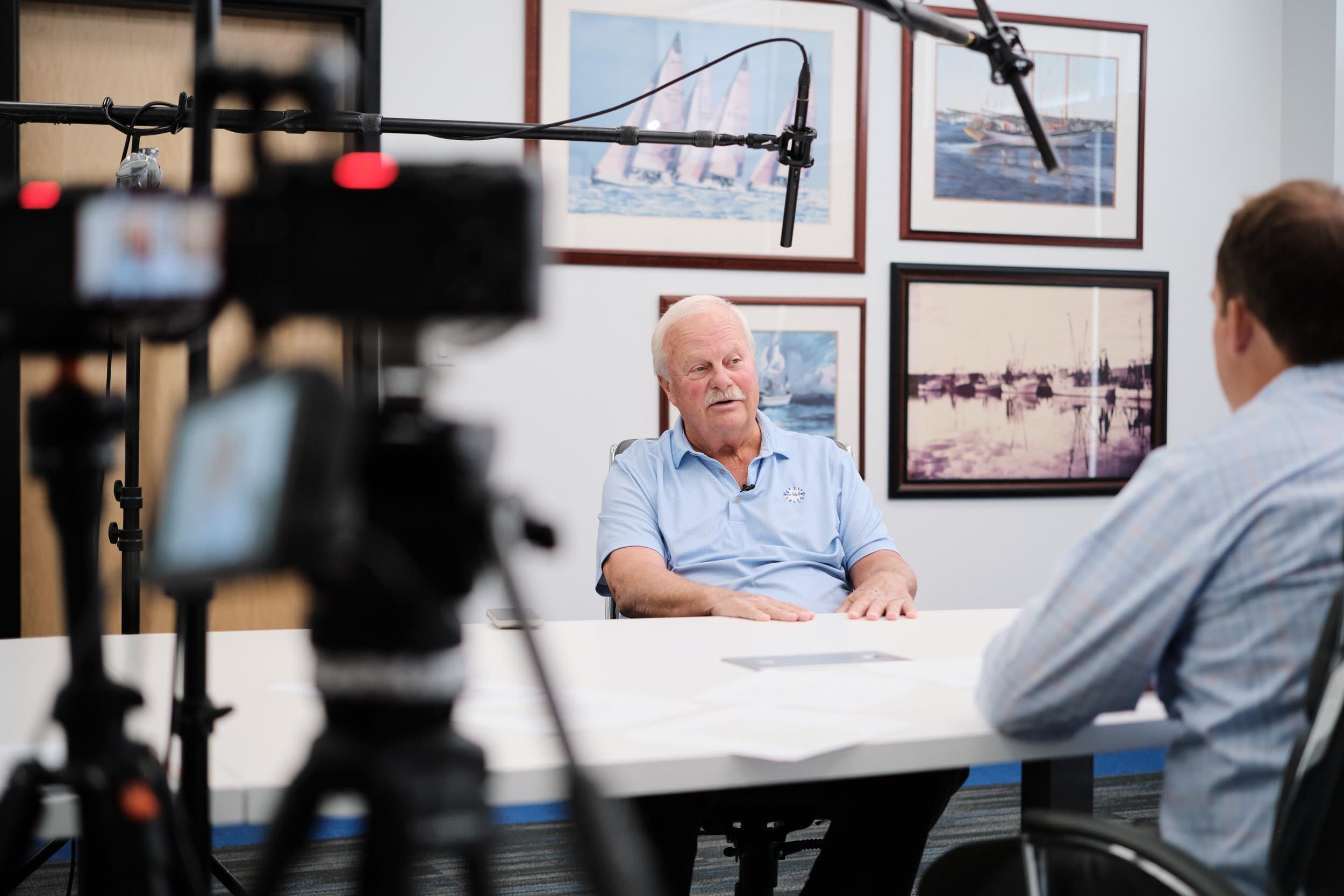
A combined day looks like this. We set up a video interview station in one conference room with professional lighting, lavalier microphones, and a backdrop. Down the hall, we set up a headshot station in a second conference room with studio strobes and a portrait backdrop. In the morning, the video crew runs interviews while the headshot station photographs team members on a rotating schedule. By noon, we've captured four to five interviews and 20 headshots. After lunch, we swap: the video crew shoots b-roll of the office and team in action while the headshot station finishes the remaining team members.
By 3 PM, the client has 40 headshots and enough footage for three to four interview-style videos, all from one day of disruption to their team. Booking photo and video separately would mean two setup days, two coordination headaches, and two days pulling people away from their work. The combined approach cuts that in half. The headshot side of that combined day runs through the same Corporate Headshot Program I use on photo-only visits.
Combine photo and video in one visit
Get headshots and interview videos from a single coordinated day. Less disruption, more content.
Get a QuoteThe Planning Timeline (Be Realistic Here)
Book four to six weeks out for a standard project. That gives enough time for discovery, shot list development, scheduling, and pre-production. If the project involves scripting or storyboarding, add another two weeks. I know that sounds like a lot, but that time is what separates a polished deliverable from a rushed mess.
Multi-location projects need eight to twelve weeks. Coordinating schedules across offices, booking travel, and managing location-specific logistics takes time you can't shortcut. Rushing a multi-location shoot leads to missed interviews, unavailable spaces, and content gaps that require expensive follow-up visits. I've seen a $15,000 project turn into $25,000 because the planning timeline was compressed and we needed two additional travel days to fill gaps.
If you need it in two weeks, I can probably make it work. But your team needs to be ready. That means interview subjects identified and confirmed, locations scouted and reserved, and someone on your side managing internal scheduling. I can compress my process, but I can't compress yours.
One more thing most clients don't expect: the edit takes longer than the shoot. A two-minute finished video requires eight to twelve hours of editing, color grading, audio mixing, graphics, and revision. Plan for two weeks of post-production after the shoot, plus time for your internal review and approval process. Most delays in video projects don't happen during production. They happen when the finished cut sits in someone's inbox for three weeks waiting for feedback. Build that review time into your timeline upfront.