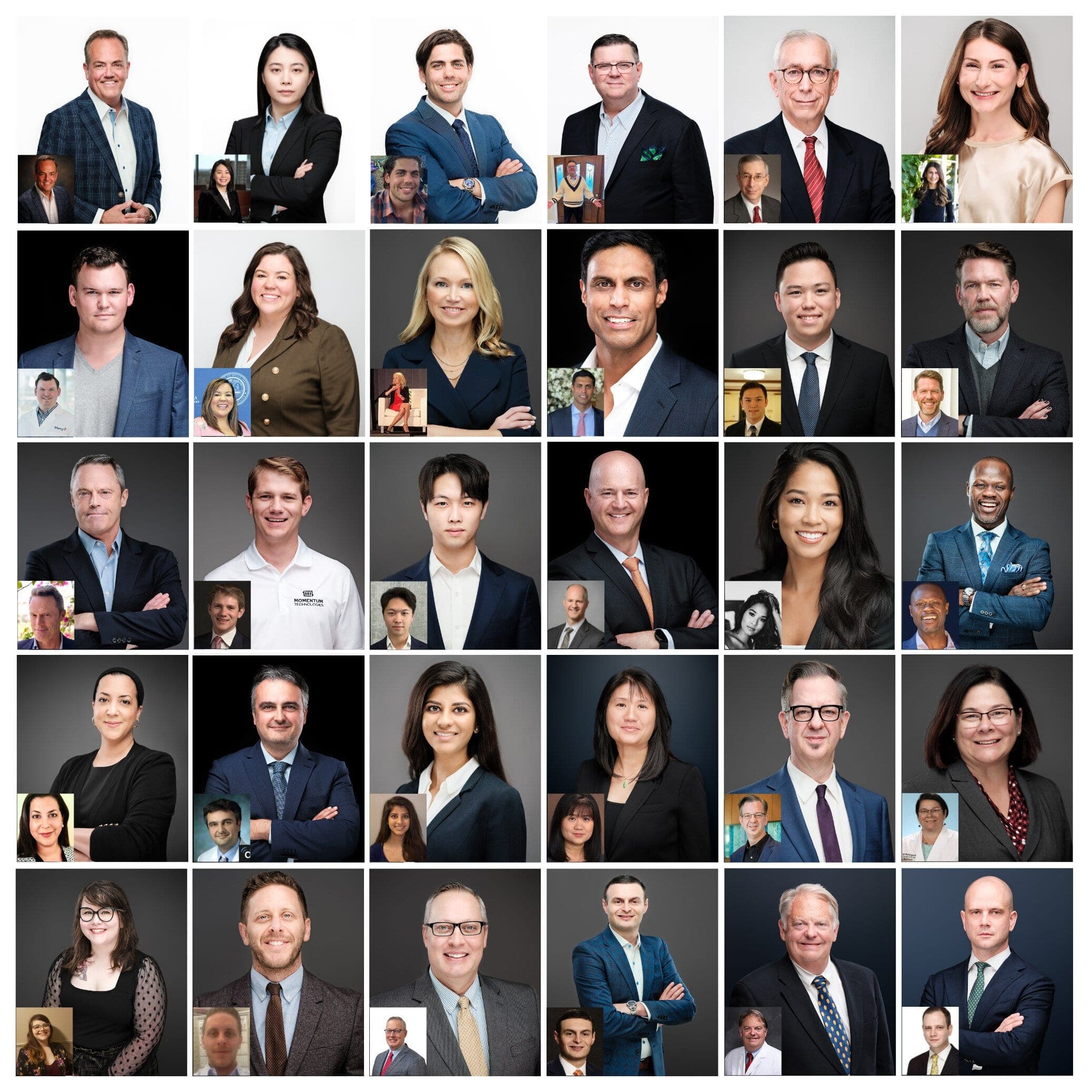
A Fortune 500 HR director sent me AI-generated headshots of her 200-person team last fall and asked if we could "just fix the ones that look weird." Forty-three of the two hundred had visible artifacts: mismatched earlobes, shirts that dissolved into neck skin, hairlines that wandered, lighting that came from two different directions on the same face. She had spent three weeks getting everyone to submit selfies. We would have been done in two days on site.
I test every major AI headshot tool that launches. It is part of knowing my industry. The question for enterprise organizations is not whether AI can generate a face. It obviously can. The question is whether the result actually serves your brand when it sits on a team page next to 199 other headshots, scrutinized by a prospect deciding whether to hire your firm. The full side-by-side lives in our guide to AI corporate headshots compared with professional photography.
What AI Gets Right (Being Honest Here)
The technology deserves real credit, and I'm not going to pretend otherwise just because I'm a photographer.
AI headshots are fast. From selfie to finished image in under five minutes. No scheduling, no travel, no sitting in front of a camera while someone tells you to tilt your chin. For someone who needs a quick LinkedIn update and doesn't want the logistics of a real session, that speed is genuinely appealing.
They're cheap. Most tools run $10 to $50 for a set of images. Compared to a professional session, which is a real investment, the math is obvious for an individual who just needs something fast.
They're convenient. You can do it from your couch at 11 PM in sweatpants. No outfit planning, no commute, no small talk.
And the technology improves fast. The images I see now from tools like Secta and HeadshotPro are noticeably better than what they produced 18 months ago. Skin texture is more realistic. Backgrounds look cleaner. The obvious "AI tells" like weird ears, melted jewelry, and impossible shirt collars show up less often.
For a solo professional who needs a placeholder headshot while they book a real session, AI tools fill a legitimate gap.
The Consistency Test You Can Run in Five Minutes
Before you commit AI to your team page, run this test yourself. Open whichever AI headshot tool your team is considering. Upload the same selfie three separate times. You will get three different results. Different skin tone, different collar angle, slightly different facial proportions. The model is generating a new image each time, not editing a photograph.
Now imagine that variance multiplied across a 200-person team where every person submits a different selfie taken in different lighting, at different angles, with different phone cameras. The outputs will not look like 200 photographs of 200 employees. They will look like 200 different art directions.
With professional photography, one photographer controls the lighting, backdrop, distance, lens, and retouching standard for every person. The same human being, the same equipment, the same room conditions, the same edit. That is the baseline a brand needs. AI cannot replicate it because it isn't designed to.
Where AI Falls Apart
Here's where the honest credit ends.
Every AI headshot starts from a selfie. The input quality caps the output. A selfie taken in bathroom lighting with a phone at arm's length gives the AI a flat, poorly lit starting point. The tool can swap the background and smooth your skin, but it can't fix the fundamental flatness of front-lit phone flash or the barrel distortion from a wide-angle lens held 18 inches from your face. Your nose looks bigger. Your ears disappear. The AI doesn't fix that. It just paints over it.
Your expression is frozen in whatever you gave it. There's no coaching. No one saying "drop your chin a quarter inch" or "think about something that makes you proud." The AI can nudge a smile slightly, but it can't manufacture the confident, relaxed expression that comes from working with someone who's directed thousands of people through the same process. Most people have no idea what their best angle is. I find it in 30 seconds. AI works with whatever you uploaded.
Lighting inconsistency across a team is impossible to control. When 50 people each upload selfies taken in different rooms, at different times of day, with different phone cameras, the AI outputs will have 50 different lighting qualities. Some warm. Some cool. Some flat. Some with harsh window shadows. No algorithm normalizes all of that into a cohesive set. I've downloaded AI headshot sets from client teams and laid them out in a grid. The inconsistency jumps off the screen.
Uncanny-valley artifacts persist. Hair edges that blur into the background. Earrings that don't quite connect to earlobes. Shirt collars with geometry that violates physics. The eyes are too symmetrical. The skin is too smooth. The background lighting doesn't match the face lighting. These details are subtle individually, but your brain registers the cumulative effect. The image feels off even if a viewer can't articulate why. Prospects feel it too, and in a trust-based business, that subtle wrongness works against you.
The legal gray area is real. Is an AI-generated headshot actually your likeness, or is it a generated approximation trained on millions of other faces? If your headshot contains fragments of other people's features, who owns that image? For organizations in regulated industries like financial services, healthcare, and legal, this ambiguity matters. It hasn't been fully tested in court yet, but compliance teams are already flagging it.
The Team Consistency Problem (The Real Dealbreaker)
This is where AI headshots fail organizations completely.
When 50 people each use different AI tools, upload different quality selfies, and pick different style options, the results look like 50 different photographers shot them. Different lighting quality. Different background tones. Different retouching levels. Different crops. Different color temperatures. I pulled up a team page last month where half the team had used AI, and you could immediately spot which ones. They looked pasted in.
That's the exact opposite of brand consistency. The whole point of team headshots is that everyone looks like they belong to the same organization. Same lighting. Same background. Same crop. Same retouching standard. When a new client visits your team page, visual uniformity signals coordination, professionalism, and intentionality.
AI-generated headshots signal that each person was on their own. No coordination. No standard. No one invested enough to do it properly. That's not the message any serious organization wants to send.
Want to see the real difference?
Book a 10-minute test session and compare the result to any AI tool yourself. No commitment.
Get a QuoteThe IT and Compliance Problem Most Buyers Miss
This one catches enterprise procurement teams off guard. Many organizations, especially in healthcare, financial services, and government contracting, cannot have employees uploading selfies and biometric data to third-party AI tools. Data governance policies restrict what employee images can be shared with external vendors. Likeness rights become murky when an AI tool's terms of service include broad usage and training licenses. Vendor security reviews add weeks of friction before IT will even approve a new tool.
I have watched AI headshot projects stall for two months while legal and IT reviewed the vendor's data handling practices. The whole point of AI was speed. That speed disappeared the moment it hit procurement. A photographer with a Certificate of Insurance and a signed Master Service Agreement walks through the front door and starts shooting the same week. No selfie uploads, no third-party model training on your employees' faces, no legal review of an AI vendor's terms. The compliance picture is dramatically simpler.
If you work in a regulated industry, ask your CISO and your general counsel whether your organization can sign off on uploading every employee's face to an AI vendor before you commit. Most cannot. The teams that say yes often regret it during the next vendor risk assessment.
What Happens in Two Years
Most teams looking at AI headshot tools never ask this question, and it's the one that costs them the most: what happens when you hire 30 new people next year?
AI headshots cannot be refreshed without a new selfie from every new hire. Those new selfies are taken in different lighting, with different phones, producing different results from the originals. Your team page slowly drifts back into inconsistency. The unified look you paid for the first time disappears one new hire at a time.
Professional headshots from a single photographer come with a documented style guide. We record the exact lighting setup, modifier positions and power ratios, backdrop, lens, camera height, retouching parameters, and crop. When a new hire joins in 2027, we pull up the spec sheet and recreate the identical setup. Their headshot drops onto the team page and looks like it was taken the same day as everyone else's.
That is the difference between a system and a one-time output. AI gives you the output. We give you the system that holds the look together for the lifetime of the team page.
When to Use Each (My Honest Take)
I'll give it to you straight, even though it costs me business to say this.
Use AI when: You need a quick personal LinkedIn update and your current photo is five years old. You need a placeholder while scheduling a professional session. You're an individual freelancer who genuinely can't afford a professional session right now. In those cases, a decent AI headshot is better than a bad selfie or the default gray LinkedIn silhouette.
Use professional photography when: Anything is client-facing. Anything is team-wide. Anything represents your organization rather than just you. Anything in a regulated industry where image authenticity and data governance matter. Anything that will be used for more than six months. Anything where consistency across multiple people matters. Anything where you want to look like yourself, not an algorithm's best guess at what you might look like in better lighting.
Need this fixed across a 50+ person team?
Send us your office list and timeline. We'll send back a travel plan and a program quote within one business day.
Get a QuoteWhat We Do That AI Cannot
When a client adds tethered review, every image appears on a 32-inch monitor in real time as I capture it. You see what I see. There's no mystery, no hoping it turns out okay. If a collar is off or someone blinked, we both see it instantly and reshoot.
I coach expressions. Not "say cheese." Real direction: where to put your hands, how to angle your shoulders, what to do with your eyes. A jaw that's clenched. Shoulders creeping up toward the ears. A smile stuck in performance mode instead of something real. I will crack a joke to break the tension, then capture the laugh that follows. Most people don't know how to look natural on camera. That is literally my job, and I have done it thousands of times.
With tethered review, you pick your favorite before you leave. No waiting days to see if any of the photos worked. You know before you walk out the door.
For team sessions, I bring the same calibrated lighting rig to every location. Whether I'm shooting in your St. Louis headquarters or your Chicago satellite office, the light is physically identical. Every person's headshot matches every other person's headshot. That is not something AI can promise, because it requires a real human controlling a real environment with real equipment.
I am not anti-technology. I use AI tools in my editing workflow every day for noise reduction, masking, and batch processing. But when it comes to representing real people and real brands, the camera still has to be in the room with the person. That part has not changed, and the gap between AI output and a coached, calibrated portrait is wider than the marketing makes it sound. That consistency is the whole premise behind the team headshot programs I run for organizations across the country.