Your ERAS headshot is often the first impression a residency program will have of you. It won't make or break your application on its own. But in a stack of 300 applications, program directors can spot an iPhone headshot, an AI headshot, and a professional headshot in under two seconds. A polished photo signals that you take your career seriously and pay attention to detail. A bad one raises a question mark before they've read a single word of your personal statement.
ERAS Headshot Technical Requirements
The ERAS system has specific technical requirements for uploaded photos. Get these wrong and your image will either be rejected on upload or display poorly when program directors view your application.
We format every ERAS headshot to these exact specifications. You don't need to resize or compress anything yourself. The file we deliver uploads directly.
What Program Directors Look For
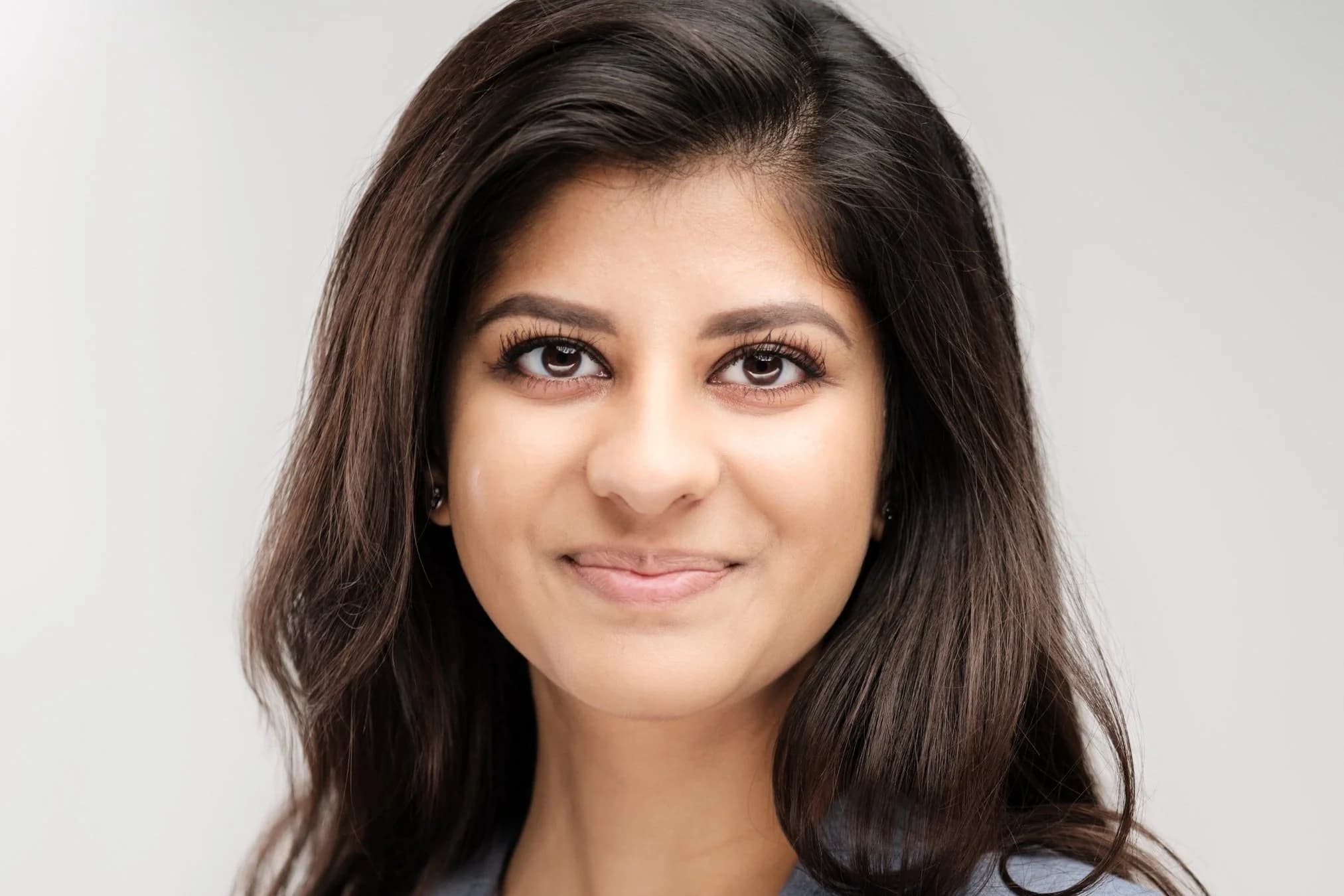
I've had program directors at WashU tell me directly that a polished headshot doesn't guarantee an interview, but a bad one raises a question mark. They're reviewing hundreds of applications. They're making fast impressions. They want to see a real person who looks professional, put-together, and approachable.
Beyond the technical specs, program directors are forming a gut reaction. They want to see:
What to Wear for ERAS
For most specialties, business professional is the standard. A dark suit jacket or blazer (navy, charcoal, or black) over a solid collared shirt (white or light blue). No white coat unless you're already an attending. A short white coat in an ERAS photo can read as presumptuous to some program directors.
Solid colors photograph best. Patterns, plaids, and stripes create visual noise that distracts from your face. Bright colors are risky. They can cast color onto your skin under studio lighting and they stand out in a way that might not match the program's culture.
Minimal accessories. Small earrings are fine. Avoid anything that draws attention away from your expression. No scrubs, even for surgical specialties. The ERAS photo should be your most polished presentation.
If you're applying to multiple specialties with different cultures, stick with the more formal option. You can always dress down for an interview. You can't retake your ERAS photo mid-cycle.
Timing Your ERAS Headshot
ERAS opens in early September for most specialties. Your headshot should be finalized well before then. Here's the timeline I recommend:
Don't let this sneak up on you. I see medical students every year who waited until the last week of August and are stressed about something that should have been a calm, 30-minute experience.
Book your ERAS headshot session
Professional ERAS-compliant headshots with same-week turnaround. St. Louis studio or on location.
Get a QuoteWhy Professional Matters
A selfie or phone photo taken in a hospital hallway will stand out for the wrong reasons when placed next to professional headshots. The lighting is wrong. The background is cluttered. The angle is off. Program directors see it immediately.
AI-generated headshots are even riskier. Some program directors have started flagging them. The uncanny smoothness, the too-perfect symmetry, the lighting that doesn't quite match reality: these are tells. Don't gamble your application on a $10 AI tool.
ERAS headshot sessions run $250-$350 and include the session, expression coaching, professional retouching, and files formatted for ERAS, VSAS, NRMP, LinkedIn, and personal use. That's less than a single textbook. Compared to the cost of your medical education and the importance of the match process, it's not a question.
Expression Coaching
Most medical students are understandably nervous in front of a camera. You've spent four years in lecture halls and hospitals, not in front of a lens. That's exactly why we include expression coaching in every session.
We guide you through natural positioning and micro-adjustments. A slight chin tilt. A shift in weight. A thought prompt that brings out a genuine expression instead of a frozen smile. The goal is confident and approachable, not stiff or uncomfortable. Most students relax within the first two minutes once they see a good shot of themselves on the tethered monitor.
The WashU and SLU Connection
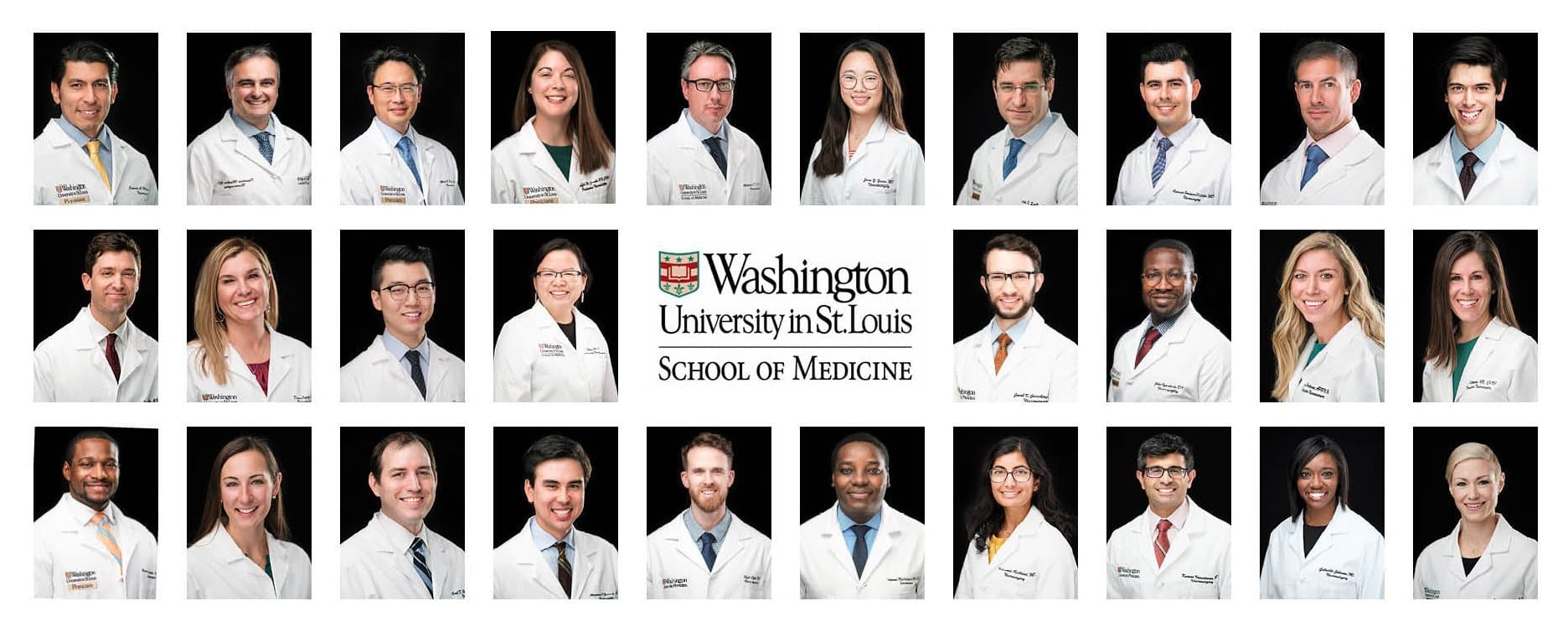
We photograph residents and medical students from Washington University School of Medicine, Saint Louis University School of Medicine, and A.T. Still University for their ERAS applications every cycle. Our studio is five minutes from the WashU medical campus. We know the AAMC requirements because we shoot hundreds of these per year, not because we read about them online.
We offer flexible scheduling around clinical rotations, including early morning and evening appointments. Walk-ins are available during peak season when slots open up, but booking ahead is strongly recommended.
Don't wait until September
Sessions fill up fast during application season. Book now and cross it off your list.
Get a QuoteOur Process for ERAS Headshots
Your session takes about 30 minutes. We set up multiple background options, including white, light gray, and light blue, so you have choices. You'll review every image in real time on a tethered monitor during the session. You pick your favorite before you leave. No waiting, no wondering.
We deliver your final retouched headshot within the same week, formatted and sized for every platform you need: ERAS, VSAS, NRMP, LinkedIn, and a high-resolution version for personal use. One session covers everything.